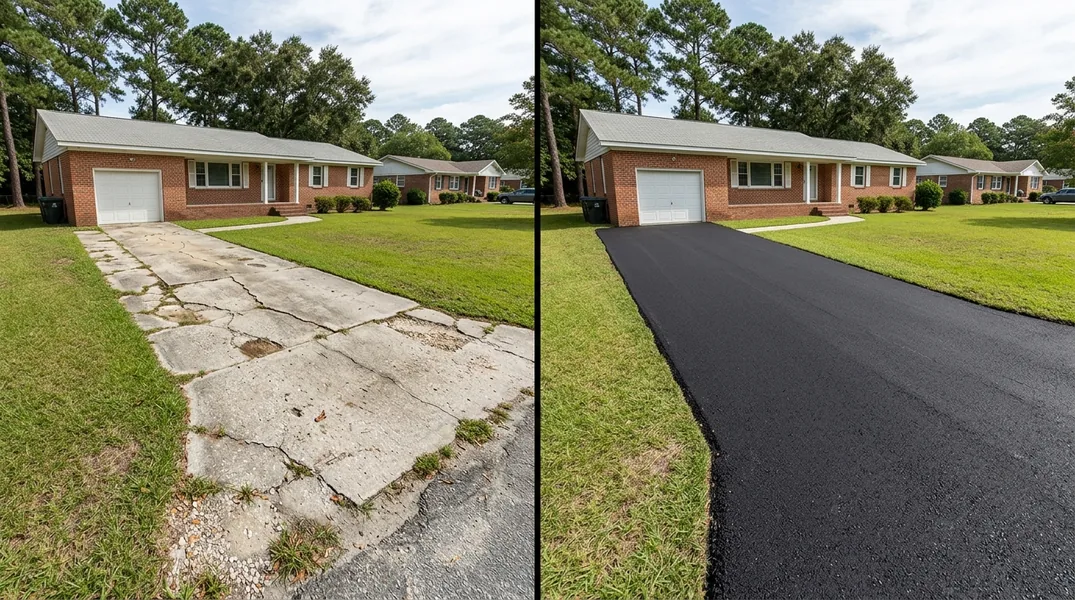
Understanding Jacksonville's Sandy Soil Challenge
If you own a home in Jacksonville, you've likely noticed that driveways here face unique challenges compared to other regions. The sandy, loose soil that characterizes much of our area creates an unstable foundation for asphalt surfaces. Unlike clay or compacted earth in other parts of North Carolina, sandy soil shifts, settles unevenly, and allows water to drain too quickly in some spots while pooling in others. This inconsistency is one of the primary reasons why driveways in Jacksonville require special attention during installation.
When sandy soil isn't properly prepared before Asphalt Driveway Paving & Installation, it becomes the weak link in your driveway's lifespan. The asphalt itself may be of excellent quality, but if it's sitting on an unstable base, even the best material will eventually fail. Homeowners often blame the asphalt for cracking or crumbling, when in reality the problem started well before the first layer of blacktop was laid. This is why the foundation preparation phase is absolutely critical to driveway longevity in our area.
Why Compaction Is the Foundation of Driveway Success
Compaction is the process of densely pressing down soil and base materials to create a stable, load-bearing surface. For driveways built on sandy soil, this step is not optional; it's essential. When soil is properly compacted, it reduces the air pockets that allow water infiltration and shifting. A well-compacted base distributes the weight of vehicles evenly across the driveway surface, preventing the uneven settling that leads to cracks, depressions, and eventually, significant damage requiring Driveway Repair.
Professional compaction involves using specialized equipment to compress the subgrade (the layer directly beneath the asphalt) to a specific density standard. In Jacksonville's sandy conditions, this typically means achieving at least 95 percent of the soil's maximum density. Without this level of compaction, the sandy base will continue to settle and shift under the weight of vehicles, causing the asphalt layer above to crack, heave, and develop potholes. The difference between a driveway that lasts 15 years and one that lasts 25 years often comes down to how thoroughly the base was compacted during the initial installation phase.
How Poor Compaction Leads to Potholes and Frost Heave
Potholes are one of the most visible signs of a failing driveway, and in Jacksonville's sandy soil environment, they often develop faster than homeowners expect. When the base isn't compacted properly, water seeps down through small cracks in the asphalt and saturates the sandy soil beneath. As vehicles drive over the weakened spot, the asphalt breaks apart, and the loose sand gets displaced, creating a depression that quickly grows into a pothole. This is why Pothole Repair & Asphalt Patching services are so common in areas with inadequate base preparation.
Frost heave is another serious issue tied to compaction failure, particularly during winter months when temperatures fluctuate. When sandy soil isn't compacted, it retains moisture more easily. As temperatures drop, that moisture freezes and expands, pushing the asphalt upward. When it thaws, the asphalt settles unevenly, creating cracks and displacement. Homeowners experiencing frost heave damage often face a difficult choice: invest in repeated Driveway Repair work or consider whether to repair or replace asphalt driveway entirely. In many cases, if the base wasn't properly compacted during installation, patching alone won't solve the problem permanently.
The Repair or Replace Decision: When Compaction Failure Becomes Irreversible
Homeowners facing repeated driveway problems often wonder whether they should continue with repairs or invest in a complete replacement. This decision hinges significantly on whether the original installation included proper compaction. If your driveway was installed with inadequate base preparation, even the best Pothole Repair & Asphalt Patching work will only provide temporary relief. The underlying problem (an unstable, shifting sandy base) will continue to cause new damage.
When deciding whether to repair or replace asphalt driveway, consider the age and condition of your current surface. If your driveway is less than 10 years old and already showing significant cracking, potholing, or heaving, replacement with proper compaction is likely the better long-term investment. However, if your driveway is relatively new and the damage is limited to a few potholes or minor cracks, targeted repair work might be sufficient. Jacksonville Asphalt Paving can assess your specific situation and provide honest guidance. Contact us at (910) 526-0876 for a free estimate to evaluate whether your driveway needs spot repairs or a complete replacement.
Best Practices for Asphalt Driveway Installation in Sandy Soil
If you're planning new Asphalt Driveway Paving & Installation, understanding proper techniques for sandy soil is crucial. The process should begin with site evaluation and removal of any unsuitable topsoil. Once the subgrade is exposed, it must be compacted in layers, not all at once. Professional contractors use a multi-lift approach, compacting the soil to the required density in 4 to 6 inch lifts. This ensures uniform density throughout the base and prevents settling later.
After the subgrade is properly compacted, a well-draining base course (typically crushed stone or recycled asphalt) should be added and compacted to the same standard. Only after this foundation is solid should the asphalt binder and wearing courses be applied. This layered approach, combined with proper compaction at each stage, creates a durable surface that can withstand Jacksonville's sandy soil conditions and the weight of regular vehicle traffic for many years.
Protecting Your Investment: Maintenance After Proper Installation
Once your driveway is installed with proper compaction, ongoing maintenance becomes your best defense against premature failure. Regular seal coating (typically every 2 to 3 years) protects the asphalt from UV damage and water infiltration. Prompt attention to small cracks prevents them from expanding into larger problems that require expensive repairs. In Jacksonville, where sandy soil can shift seasonally, maintaining proper drainage around your driveway is equally important. Ensure water flows away from the surface and doesn't pool in low spots.
If you notice early signs of damage, such as small cracks or minor surface deterioration, addressing them quickly can extend your driveway's life significantly. Jacksonville Asphalt Paving offers comprehensive maintenance services, from seal coating to targeted repairs. By investing in preventive care now, you avoid the much larger expense of dealing with potholes, frost heave, and the difficult decision of whether to repair or replace asphalt driveway down the road. For a consultation on how to best maintain your driveway, reach out to us at (910) 526-0876 or request a free estimate today.
Looking for a professional asphalt paving contractor in Jacksonville? Jacksonville Asphalt Paving responds fast for all your asphalt paving needs.
Get a Free Quote