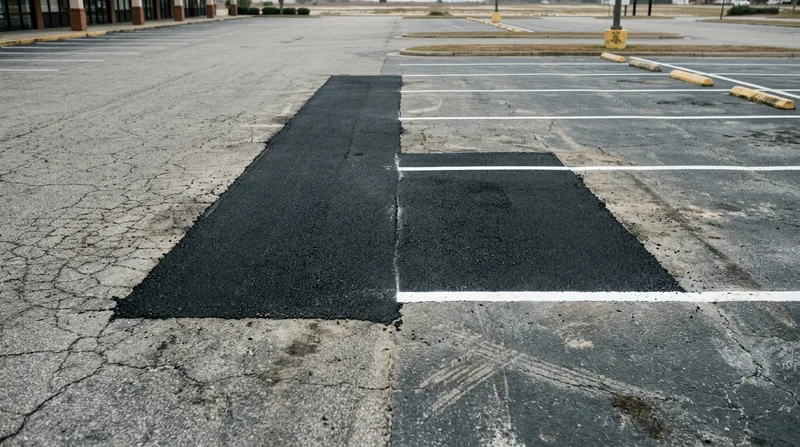




Parking Lot Repair & Resurfacing in Jacksonville keeps your pavement functional and safe through the heavy rains and seasonal shifts that crack and pothole asphalt across Onslow County. Jacksonville's sandy coastal plain soil moves when water saturates it, and our 54 inches of annual rainfall, concentrated in hurricane season downpours, finds every weak spot in an aging lot. Potholes, alligator cracking, and base failure are not cosmetic problems, they're structural failures that accelerate once they start. We cut out failed sections, rebuild the base with proper compaction and pitch, and patch or resurface so the lot sheds water fast and stays drivable for years. If your lot is showing age or damage, call us for a free estimate.
Why Parking Lot Repair Matters in Jacksonville's Climate
Jacksonville lots fail differently than they do inland. The sandy subgrade that underlies most of Onslow County drains well on high ground but holds moisture in low spots, and when hurricane-season rain saturates the soil beneath your pavement, it loses bearing capacity. The asphalt surface cracks, water gets in, and the base erodes from underneath. What starts as a small pothole becomes a section that needs cutting out and patching. Left unchecked, it spreads into alligator cracking that signals the base is compromised. The longer you wait, the more expensive the repair becomes.
- Potholes form where water pools and the base gives way, creating a safety hazard and accelerating surrounding failure.
- Alligator cracking indicates the base has lost structural integrity and patching alone will not hold the surface.
- Edge cracking and spalling happen where water infiltrates the edge of the lot and freezes or erodes the base during wet seasons.
- Rutting and depressions show that the subgrade is settling unevenly, usually from poor initial compaction or inadequate pitch.
Catching these problems early and patching or resurfacing before they spread saves thousands in replacement costs later.
Local example: A 5,000-square-foot commercial lot in Jacksonville with three or four major potholes and light alligator cracking over 20 percent of the surface is a patch-and-overlay candidate. If alligator cracking covers more than 30 to 40 percent, the base is likely gone and patching throws money away, full resurfacing is the right move.
The North Carolina Department of Transportation and local building departments in Jacksonville, Sneads Ferry, Swansboro, and other municipalities in the area have guidelines on stormwater management and lot drainage that may apply to your property. We help you understand what your lot requires and what repairs will bring it into compliance. For details on local permitting, contact your city or county building department or see the NCDOT website for statewide standards.
How We Repair and Resurface Parking Lots in Jacksonville
Our process starts with a site visit to assess the damage, measure the lot, and determine whether patching, resurfacing, or full-depth repair is the right call. We remove failed asphalt, evaluate the base, rebuild or recompact it as needed, and lay new asphalt with proper pitch and edge compaction so water runs off fast. Every step is done to shed water and prevent the pooling and infiltration that caused the failure in the first place.
- We inspect the lot, identify failed sections, and measure the area needing work.
- We saw-cut the perimeter of the failed zone to create clean edges and remove the damaged asphalt.
- We excavate the failed base material, evaluate the subgrade, and add or recompact aggregate base as needed.
- We proof-roll the base to verify compaction and ensure it will support new asphalt without settling.
- We lay new hot-mix asphalt at the proper thickness, compact it fully, and finish with edge work so water sheds off.
- We allow the asphalt to cure before opening the lot to traffic, typically 24 to 48 hours depending on temperature.
The time from start to drivable surface is usually one to three days for a typical lot, depending on size and weather.
Jacksonville example: A 3,000-square-foot lot in Piney Green with two potholes and light edge cracking takes one day to patch. A 10,000-square-foot lot in Richlands with 25 percent alligator cracking takes two to three days to mill and resurface, depending on base conditions and weather.
If your lot is showing widespread damage or if you are planning a larger capital project, asphalt resurfacing and overlay may be a better fit than patching.
Parking Lot Repair Methods and When to Use Them
| Approach | Description | Best For |
|---|---|---|
| Pothole Patching | Remove failed asphalt and base, rebuild the base with compacted aggregate, and lay new asphalt to match surrounding pavement. | One to five potholes, minimal surrounding damage, base still sound. |
| Full-Depth Patching | Remove asphalt and failed base to subgrade, rebuild base with proper compaction and drainage, and install new asphalt. | Large potholes, alligator cracking over a localized area, base is compromised. |
| Milling and Overlay | Mill off the top layer of old asphalt, inspect and repair the base if needed, and lay a new asphalt overlay. | Widespread cracking over 20 to 30 percent, base is still structurally sound, lot is not severely rutted. |
| Full Resurfacing | Remove all existing asphalt, rebuild the entire base with compacted aggregate and proper pitch, and install new asphalt. | Alligator cracking over 40 percent or more, severe rutting, base failure, or lot older than 20 years. |
Each method is chosen based on the extent of damage and the condition of the base underneath. We assess your lot on site and recommend the approach that gives you the best return on investment.
Parking Lot Repair & Resurfacing Cost in Jacksonville: What to Expect
Parking lot repair pricing depends on the size of the lot, the extent of damage, base conditions, and whether you need patching, overlay, or full resurfacing. A small pothole patch on a commercial lot in Jacksonville starts around $650 to $1,200 depending on access and base work. Larger lots with multiple failures or alligator cracking typically run $1,500 to $4,000 or more for partial repair, and full resurfacing of a 5,000 to 10,000 square foot lot can range from $5,000 to $15,000 or higher based on base condition and finish. Every lot is different, and we provide a written estimate with tonnage and thickness specs after a site visit.
Factors that move the price up include the following: a large area of failed pavement, base that needs to be removed and rebuilt, poor drainage or standing water that requires grading, and limited access for equipment. If your lot sits low and holds water after rain, base work and improved pitch will add cost but are essential to prevent the same failures from happening again. We always give you a clear breakdown of what the repair includes and why each step is necessary.
The best way to understand the cost for your lot is to request a free estimate. We measure on site, assess the damage, and provide a written quote with no obligation. We respond within 24 hours at (910) 526-0876. For more detail on pricing across all our services, see our full pricing overview.
Parking Lot Repair & Resurfacing Near Me: What Jacksonville Property Managers Should Know
Hiring a contractor for parking lot repair is a straightforward process if you know what to look for. Get at least two or three estimates from local contractors who have worked in Jacksonville and the surrounding areas. A good estimate includes a site visit, a clear description of the work to be done, the thickness and tonnage of asphalt, the cost, and a timeline. Be wary of any contractor who quotes over the phone without seeing the lot or who offers a price that seems too good to be true, those are red flags.
Ask any contractor whether they are fully insured and whether they carry liability coverage. We maintain comprehensive insurance and can provide a certificate on request. Check references from recent jobs if possible, and verify that the contractor has done similar work in Jacksonville or nearby towns. Ask whether they understand local permitting requirements and whether they will help you navigate any permits your lot may need. Some municipalities in the Jacksonville area have stormwater or drainage requirements for parking lots, and your contractor should be familiar with these.
If your lot is part of a commercial property or an HOA, check whether there are architectural or design standards you need to follow before work begins. We help you understand what your property requires and what repairs will meet local codes. For more information on choosing a contractor and getting the right estimate, contact us or call (910) 526-0876.
Parking Lot Repair & Resurfacing in Jacksonville: Pricing Guide
| Service | Price | Details |
|---|---|---|
| Pothole patch (single or small area) | Starting at $650 | Small pothole removal, base inspection and repair, new asphalt patch to match surrounding surface |
| Partial lot repair (multiple potholes or localized failure) | Starting at $1,500 | Two to five failed sections, full-depth removal, base rebuild, asphalt overlay, site cleanup |
| Mill and overlay (light to moderate cracking) | Starting at $3,500 | Milling of old surface, base inspection and spot repair, new asphalt overlay, proper drainage pitch |
| Full resurfacing (extensive damage or base failure) | On estimate | Complete removal of old asphalt, full base rebuild with compaction, new asphalt installation, requires site assessment |
| Travel and site visit | Included | No separate travel fee in Jacksonville and surrounding Onslow, Carteret, Duplin and Craven County areas |
| Free written estimate | Free | Response within 24 hours at (910) 526-0876, includes site measurement, damage assessment, and detailed quote |
Indicative pricing, the exact cost depends on square footage, finish, and site access. Free personalized estimate within 24h at (910) 526-0876.


