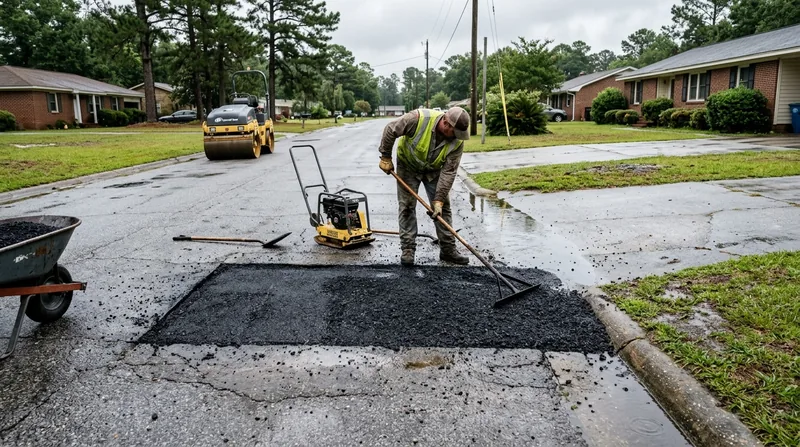




Hurricane-season downpours pool in low spots and punch potholes through Jacksonville driveways. We cut clean edges, tack the joint, and pack hot mix flush so the fix holds through the next storm. Pothole repair and asphalt patching in Jacksonville stops the damage before it spreads to the base layer, where a $3,000 resurfacing or $8,000 replacement becomes necessary. The flat sandy terrain around Camp Lejeune and across Onslow County drains well on high ground, but the creeks and marsh drainages that cut through the landscape create low spots where water pools after 54 inches of annual rainfall, especially during summer and fall tropical systems. A pothole that starts as a small surface break in March can double in size by June if left unpatched, because each rain event forces water deeper into the aggregate base and softens it further. We handle single potholes, clusters of failed patches, and full-section repairs on residential driveways, private roads, and parking lots across Jacksonville and the surrounding service area. Call us at (910) 526-0876 for a free estimate, or visit our contact page to request a site visit.
Why Pothole Repair Matters in Jacksonville's Coastal Plain Climate
Potholes are not cosmetic. They start as surface cracks where water enters the asphalt, but Jacksonville's seasonal rainfall patterns and sandy base soils mean that water moves fast through the pavement and into the aggregate beneath. Once the base softens, the surface breaks apart under the weight of a car, and the hole grows each time a tire hits it. The damage spreads sideways and downward, weakening the asphalt around the pothole and creating more failures nearby. A single unpatched pothole can become three within a season, and by then the cost to repair has jumped from a few hundred dollars to a full resurfacing of that section.
- Standing water in a pothole freezes briefly in the rare Jacksonville winter, but the real damage is year-round saturation of the base layer, which turns sandy soil to mud and collapses support under the asphalt.
- Potholes on private roads and HOA streets create liability if a resident's vehicle is damaged, and municipalities can fine property owners for unpaved or failed surfaces.
- Hot mix asphalt bonds best to a clean, tacked surface, so patching works only when the old pavement is cut away and the joint is sealed before new material is placed.
- A pothole left unrepaired for more than one full rain season usually signals that the base has failed across a larger area, and patching alone will not hold.
Early repair stops the cascade and keeps the rest of the driveway intact.
Local reality: Jacksonville's post-war ranch subdivisions and newer phases toward Carteret and Pender counties all run on straight driveways from garage to street across rectangular lots. A single pothole in a driveway that was not graded or compacted correctly at install can signal a larger base problem, especially if the low spot is near a drainage swale or creek. We inspect the full driveway, not just the hole, to recommend the right fix.
For more information on how drainage and base preparation affect the lifespan of asphalt, see our page on driveway repair.
How We Repair Potholes and Patch Asphalt in Jacksonville
The difference between a patch that lasts and one that fails within a year is preparation. We do not throw material into a hole and call it done. We cut clean vertical edges into the sound asphalt around the damaged area, remove all loose material and standing water, apply a tack coat to bond the new asphalt to the old, and then place and compact hot mix to the original surface level. The joint must be sealed so water cannot enter again. On a residential driveway in Jacksonville, a single pothole repair takes two to four hours and can be completed in one visit. Larger patches or multiple failures across the driveway may require a second day or a recommendation to resurface that section.
- We measure the pothole and the surrounding failed area to determine whether patching is the right choice or whether resurfacing that section makes better financial sense.
- Damaged edges are cut back to solid asphalt using power saws, creating a clean vertical wall that new material can bond to securely.
- The base is inspected for soft spots or erosion, and any unstable material is removed and replaced with compacted aggregate if necessary.
- A liquid tack coat is brushed or sprayed onto all cut surfaces and the base to ensure the hot mix bonds permanently to the existing pavement.
- Hot mix asphalt is placed in the prepared area, struck off level with the surrounding surface, and compacted with a plate compactor or vibratory roller to full density.
- The new patch is allowed to cool before the driveway is returned to service, typically two to four hours in Jacksonville's warm season.
The result is a repair that handles the next storm without reopening.
Example from the field: A homeowner in Piney Green reported a pothole opening near the garage apron after heavy rain in August. The hole was six inches deep and widening. We cut back the edges, found the base was sound, replaced the damaged asphalt with hot mix, and sealed the joint. The patch has held through two hurricane seasons without cracking or reopening, because the base was still intact and the edge prep was done right.
Learn more about when patching is the best choice and when asphalt resurfacing makes more sense on our resurfacing page.
Pothole Repair Methods and When to Use Each
| Repair Method | Description | Best For |
|---|---|---|
| Cold patch | Pre-mixed asphalt applied without heating, compacted by hand or light equipment. | Temporary emergency repairs only. Does not bond well and will fail within months in Jacksonville's climate. |
| Hot mix patch | Asphalt heated to 300+ degrees, placed and compacted to full density with a tack coat applied first. | Single potholes and small clusters on residential driveways and parking lots. Bonds permanently and lasts five to ten years if the base is sound. |
| Full-depth patch | The entire depth of asphalt and damaged base material is removed, the base is rebuilt and compacted, and new asphalt is placed and finished flush. | Potholes where the base is soft, eroded, or saturated. Common on Jacksonville driveways in low spots or near drainage areas. |
| Spray injection patch | Liquid asphalt binder is injected under pressure into the hole, then aggregate is broadcast and compacted on top. | Small potholes on private roads or parking lots where the base is relatively sound. Faster than full-depth repair but less durable than hot mix with a tack coat. |
We assess the pothole on site and recommend the method that will last, not the one that is cheapest or fastest.
Pothole Repair and Asphalt Patching Cost in Jacksonville: What to Expect
A single pothole repair on a residential driveway in Jacksonville starts at around $450 and can run to $800 or more, depending on the size of the patch, whether the base needs to be rebuilt, and the access for our equipment. A cluster of three to five potholes across the driveway might cost $1,200 to $2,000 to repair individually. If more than thirty to forty percent of the driveway surface is failed or showing alligator cracking, we recommend resurfacing instead, because patching that much area throws money away. The cost of materials is relatively fixed, but labor and base preparation are the variables. A pothole near a drainage low spot that requires full-depth removal and base replacement costs more than a surface-only patch on high ground. Parking lot potholes are quoted on site by the number of patches and the square footage of the repair area.
We provide written estimates that specify the square footage of the patch, the tonnage of material, the depth of repair, and the method we recommend. This transparency lets you compare our quote to others and understand what you are paying for. We do not charge for the estimate, and we respond within 24 hours. Visit our pricing page for a detailed breakdown of our rates, or call (910) 526-0876 to schedule a free site visit.
Cost factors: Size of the pothole or failed area, depth of damage and whether the base is intact or soft, access for our compaction equipment, whether the repair is on a driveway or parking lot, and whether other nearby areas need attention. A pothole the size of a dinner plate costs less than one three feet across. A hole that goes through the asphalt into the base costs more than surface cracking alone.
Pothole Repair and Asphalt Patching Near Me: What Jacksonville Homeowners Should Know
Hiring the right contractor for pothole repair starts with verification. You want someone local who understands Jacksonville's drainage and rainfall patterns, who can explain why the pothole opened in that spot, and who will recommend the repair method that holds rather than the quickest fix. We are based in Jacksonville with local plates and a local crew. We do not make unsolicited door-to-door offers, and we do not ask for a large cash deposit before the work is done. Get two or three estimates in writing, each with tonnage and square footage specified. Ask the contractor whether the base will be inspected and whether the patch includes a tack coat. If someone quotes a price that seems too good to be true, it probably is. Most importantly, ask whether any local permits are required. Jacksonville and the surrounding municipalities have different rules for driveway aprons, curb cuts, and impervious surface limits. If your driveway is in an HOA, check the architectural guidelines to confirm that asphalt patching is permitted (most allow it, but some have material or appearance restrictions). Call us at (910) 526-0876 or visit our contact page to discuss your specific situation and get a free estimate with no obligation.
For guidance on choosing a contractor and understanding the paving process, see our full homepage or explore our other services like parking lot repair if you manage commercial property in the area.
Pothole Repair & Asphalt Patching in Jacksonville: Pricing Guide
| Service | Price | Details |
|---|---|---|
| Single pothole patch | Starting at $450 | Hot mix patch on residential driveway, includes edge prep, tack coat, and compaction to finished grade |
| Multiple potholes (3 to 5) | Starting at $1,200 | Cluster repair on driveway or parking lot, cost increases with size of failed area and base inspection needs |
| Full-depth patch with base repair | Starting at $700 | Includes removal of damaged asphalt and base material, aggregate replacement, and new hot mix placement |
| Parking lot patch | On estimate | Quoted by square footage and number of potholes, depends on size and whether base is stable or requires rebuild |
| Travel | Included | No separate charge for Jacksonville and surrounding service areas within Onslow, Carteret, and adjacent counties |
| Free estimate | No charge | Written quote with tonnage and square footage specified, response within 24 hours, no obligation to book |
Indicative pricing, the exact cost depends on square footage, finish, and site access. Free personalized estimate within 24h at (910) 526-0876.


