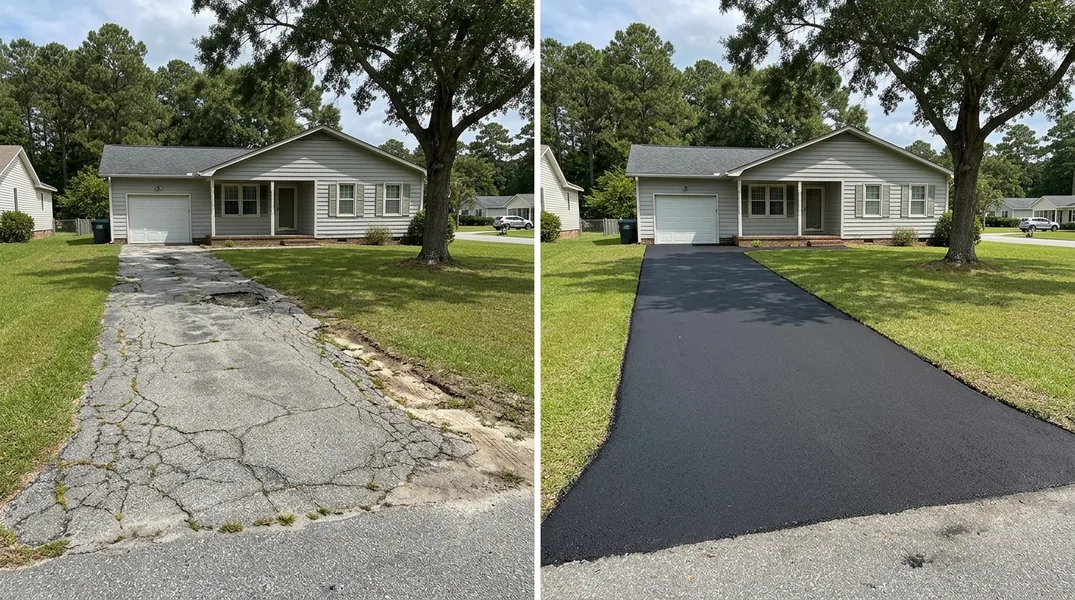
What Are Alligator Cracks and Why Do They Form?
Alligator cracks, also called map cracking or crazing, are a distinctive pattern of interconnected cracks that resemble the skin of an alligator or a spider web. These cracks typically start small but spread across your driveway surface in a dense network, creating a fragmented appearance that makes your asphalt look aged and unstable. If you've noticed this pattern developing on your Jacksonville driveway, it's a sign that your pavement is experiencing significant structural stress.
The formation of alligator cracks usually stems from one or more underlying causes. Repeated stress from vehicle weight, combined with the natural freeze-thaw cycles common in North Carolina winters, causes the asphalt to flex and contract. When the base layer beneath your asphalt weakens due to poor drainage or inadequate compaction during installation, the surface layer loses support and begins to crack. Additionally, oxidation from sun exposure over many years can make asphalt brittle and prone to this type of cracking. The longer alligator cracks go unaddressed, the worse they become, allowing water to penetrate deeper into the pavement structure and accelerate deterioration.
Repair or Replace: Assessing the Damage Severity
Deciding whether your driveway needs Driveway Repair or full replacement depends on how extensive the alligator cracking has become. If the cracks cover less than 25 percent of your driveway surface and the base layer is still structurally sound, targeted repairs or Asphalt Resurfacing & Overlay may be sufficient to restore functionality and appearance. In these early stages, professional patching combined with seal coating can extend your driveway's life by several more years. However, if alligator cracking covers more than 30 to 40 percent of the surface, or if you notice the pavement is sinking in certain areas, full replacement with new Asphalt Driveway Paving & Installation is typically the more cost-effective and durable solution.
The condition of the base layer is equally important in this assessment. When you observe alligator cracks, it often indicates that water has already penetrated the asphalt and compromised the foundation below. A professional inspection can reveal whether the subgrade is still stable or if it has suffered damage. If the base is degraded, attempting a simple repair will only provide a temporary fix, and the cracks will return within months. Jacksonville homeowners should also consider the age of their driveway; if it's approaching 15 to 20 years old and showing this pattern, replacement is usually the wiser investment than pouring money into repairs that won't last.
The Repair Option: When Patching Makes Sense
If your alligator cracks are caught early and affect only a limited area, professional repair can be an economical solution. Pothole Repair & Asphalt Patching specialists can remove the damaged section, prepare the area properly, and install new asphalt that bonds securely to the surrounding pavement. This approach works best when the underlying base is still intact and the surrounding asphalt is in relatively good condition. The repair process typically takes a day or two, and you can usually drive on the patched area within 24 to 48 hours, depending on weather conditions and the specific materials used.
After any repair work, proper maintenance becomes critical to prevent new cracks from forming. Understanding pricing for repairs versus replacement can help you make an informed decision, but remember that the cheapest option upfront isn't always the best long-term value. Seal coating should be applied annually or every two years after repair work to protect the patched asphalt from oxidation and water damage. This preventive approach to new asphalt driveway care can significantly extend the life of your repaired driveway and delay the need for full replacement by several years.
The Replacement Route: Starting Fresh
When alligator cracking is extensive and the driveway's structural integrity is compromised, replacement is often the most practical choice. Full Asphalt Driveway Paving & Installation allows contractors to address the root causes of the damage, including poor drainage and weak base layers. A new driveway starts with proper site preparation, compacted base material, and correct asphalt installation techniques that ensure longevity. While replacement requires a larger upfront investment, a properly installed new asphalt driveway typically lasts 15 to 20 years with appropriate maintenance, making it a better value than repeated repairs on a failing surface.
One important consideration for homeowners in Jacksonville and surrounding areas like Piney Green is the timing of installation and the curing process. Understanding how long for asphalt to cure helps you plan your project and manage expectations. Newly installed asphalt typically requires 24 to 48 hours before it's safe to drive on, though full curing takes several weeks. During warm weather, the process moves faster, while cooler temperatures can extend curing time. Knowing how long before you can drive on new asphalt ensures you won't damage your investment by using it prematurely.
Maintenance After Installation: Protecting Your Investment
Whether you choose repair or replacement, proper maintenance is essential for preventing future alligator cracking. One of the most effective preventive measures is regular seal coating, which creates a protective barrier against UV rays, water infiltration, and oxidation. Most asphalt experts recommend seal coating every two to three years, depending on traffic volume and local weather conditions. This relatively inexpensive maintenance task can add years to your driveway's lifespan and keeps your pavement looking new longer. Understanding how often to seal driveway surfaces is crucial for any Jacksonville homeowner looking to avoid costly repairs down the road.
Beyond seal coating, proper drainage and regular cleaning are equally important. Standing water on your driveway accelerates deterioration and promotes crack formation, so ensure that water drains properly away from the surface. Remove debris, leaves, and dirt regularly to prevent moisture from accumulating in cracks. Fill small cracks promptly before they expand into larger problems. During winter months, use sand or kitty litter instead of rock salt for traction, as salt accelerates asphalt degradation. By investing in consistent maintenance, you protect your driveway from the conditions that lead to alligator cracking in the first place.
Getting Professional Help for Your Jacksonville Driveway
The best way to determine whether your alligator cracks require repair or replacement is to have a professional evaluate the damage in person. Jacksonville Asphalt Paving has years of experience assessing driveway conditions and recommending the most cost-effective solutions for homeowners. Our team can identify the underlying causes of your cracking, evaluate the structural integrity of your base layer, and provide honest guidance on your options. We understand that every driveway and every homeowner's budget is different, which is why we take time to explain the pros and cons of each approach.
Don't let alligator cracks continue to spread across your driveway. Contact Jacksonville Asphalt Paving today at (910) 526-0876 to schedule a free estimate and learn exactly what your driveway needs. Whether you're in Jacksonville, Half Moon, or Pumpkin Center, we're ready to help you make the right decision for your property. Our team will walk you through the process, explain the timeline, and ensure your new or repaired asphalt is installed to the highest standards. With proper care and professional installation, your driveway will remain safe, attractive, and functional for years to come.
Looking for a professional asphalt paving contractor in Jacksonville? Jacksonville Asphalt Paving responds fast for all your asphalt paving needs.
Get a Free Quote